
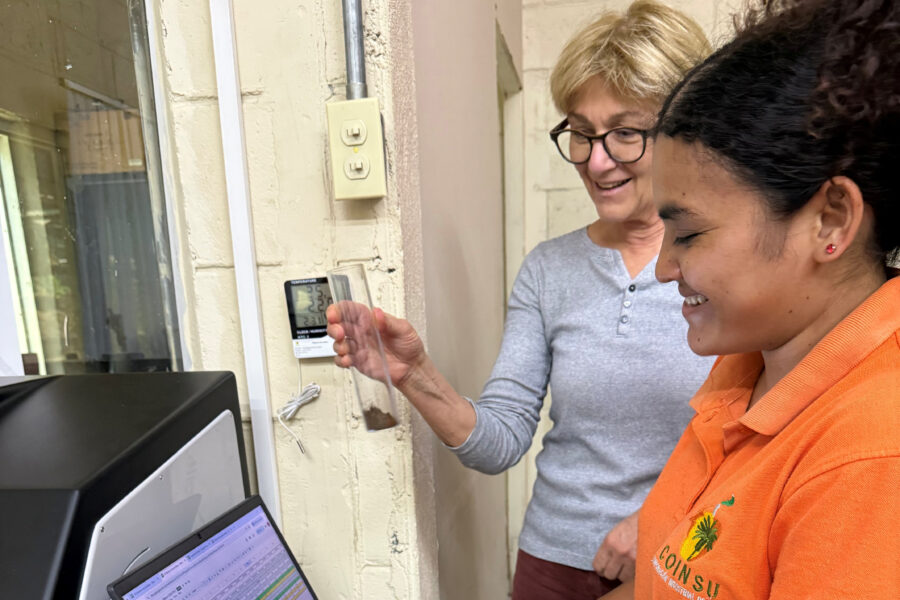
How can production losses be measured accurately – and reduced effectively as a result? At COINSU in Honduras, an SEC assignment demonstrated the impact that high-quality data, structured laboratory work, and targeted knowledge transfer can achieve. Together with SEC expert Susanne Pfenninger, the company laid the foundation for sustainable improvements in quality and process optimisation.
 A Clear Mandate – and the Right Expert
Grupo COINSU produces crude palm oil in a sustainable and environmentally responsible way. The company aimed to systematically strenghten quality control within its palm oil production and to take an initial step towards ISO/IEC 17025 compliance. The objective was to ensure laboratory results to be more reliable, comparable, and better suited for production control.
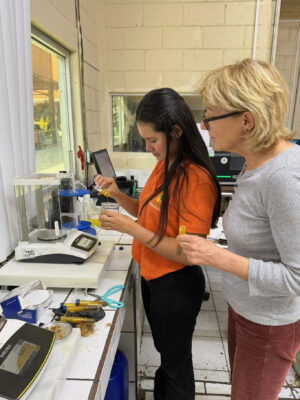
SEC deliberately selected Susanne Pfenninger for this assignment – a PhD chemist and highly experienced food safety expert. With her many years of experience in establishing laboratory structures, method development and quality management, she brought exactly what COINSU needed: strong technical expertise combined with hands-on, practical implementation on site.
“A sound interpretation of laboratory results requires not only expertise, but also trust in the data and the processes – both of which we were able to build sustainably together.” (Susanne Pfenninger)
From Measurement to Decision-Making: Tasks During the Assignment
During the six-week on-site assignment, the expert reviewed and optimised existing laboratory processes in line with the international quality standard ISO/IEC 17025. Working closely with the team, she standardised workflows, developed templates for a laboratory management system, and trained employees in method validation.
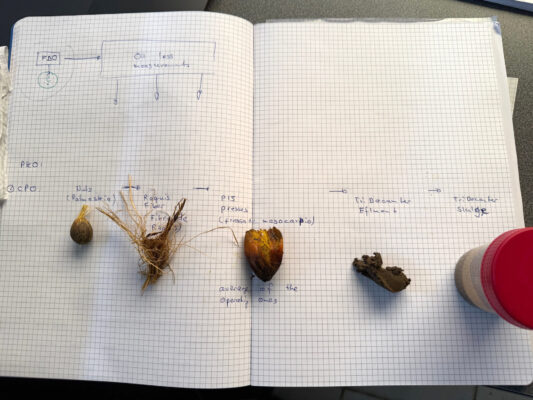
One key focus was the correct calculation of oil losses along the entire production chain – a critical indicator for both profitability and quality. Laboratory results were newly prepared, clearly communicated, and systematically linked to the production process.
 Measurable Results – Today and Tomorrow
The impact became visible already during the assignment: newly standardised methods delivered reproducible and transparent results. Production parameters could be adjusted more precisely, losses calculated more realistically, and optimisation potential clearly identified.
In the long term, COINSU plans to further develop its laboratory management system with the goal of achieving ISO/IEC 17025 accreditation within the next two years – supported by continued technical exchange.
“With the adapted methods, we obtain realistic data. This helps us manage processes more effectively and make well-founded decisions.” (Héctor Luis Castro Bonilla, General Manager COINSU)
 The Client
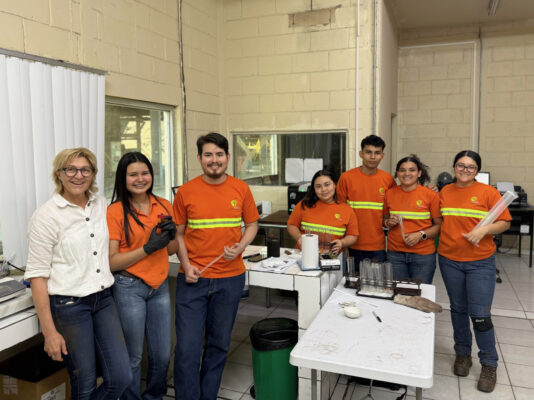
Corporación Industrial de Sula (COINSU) is based in Choloma, Cortés, near San Pedro Sula in Honduras. The company processes palm fruits from independent producers into crude palm oil and palm kernel oil, demonstrating that palm oil production can be sustainable and environmentally responsible under the right conditions. A key element is the use of by-products from palm oil processing to generate energy, allowing the entire operation to run on renewable energy. Around 60 employees are engaged along the entire value chain.
At the same time, the company is deeply rooted in local agriculture: the palm fruits are supplied by numerous family-run farms in the region, which form the backbone of the production system.
Interview with SEC Expert Susanne Pfenninger
What have you helped the client to achieve? What changes are already visible?
A sound interpretation of laboratory results requires not only expertise, but also trust in data and processes – both of which we were able to build together.
The results were prepared in a clear and understandable way and directly linked to production processes, leading to tangible improvements already during the assignment.
Was there a special moment that stayed with you?
There was no single standout moment. Rather, it was the many small encounters and experiences that came together to form a coherent overall picture. It was very special to be part of the COINSU family, and I am convinced that this strong sense of community will achieve a great deal in the future.
What were the main problems facing the client and how could you help?
One of the main challenges was the strong involvement in day-to-day operations, which left little room for new approaches. Together, however, we were able to initiate a new path and define a clear direction: improving quality control in the palm oil process and moving closer to ISO/IEC 17025. The aim was to make laboratory results more reliable and more useful for managing production.
How did the participants react to your insights and knowledge? What has been implemented?
I provided targeted recommendations, but the decision to implement them always rests with the company. Some measures were implemented immediately, others require more time and resources, and some were deliberately not pursued further. That is entirely appropriate – what matters is that the chosen solutions are a good overall fit for COINSU.
How will your assignment help the client in the future?
In the long term, the assignment will help the client to further strengthen its competitiveness and position itself more clearly in the market.
Was there an encounter or story that particularly touched you?
I met many young, motivated people within the company to whom I could pass on part of my knowledge and experience. Seeing that these impulses were taken up and carried forward by the next generation was especially moving.
What advice would you give to another SEC expert facing a similar assignment?
Remain open to new experiences and accept the local situation as it is. With flexibility and respect, you can apply your knowledge in the most effective way.

 Deutsch
 Español